
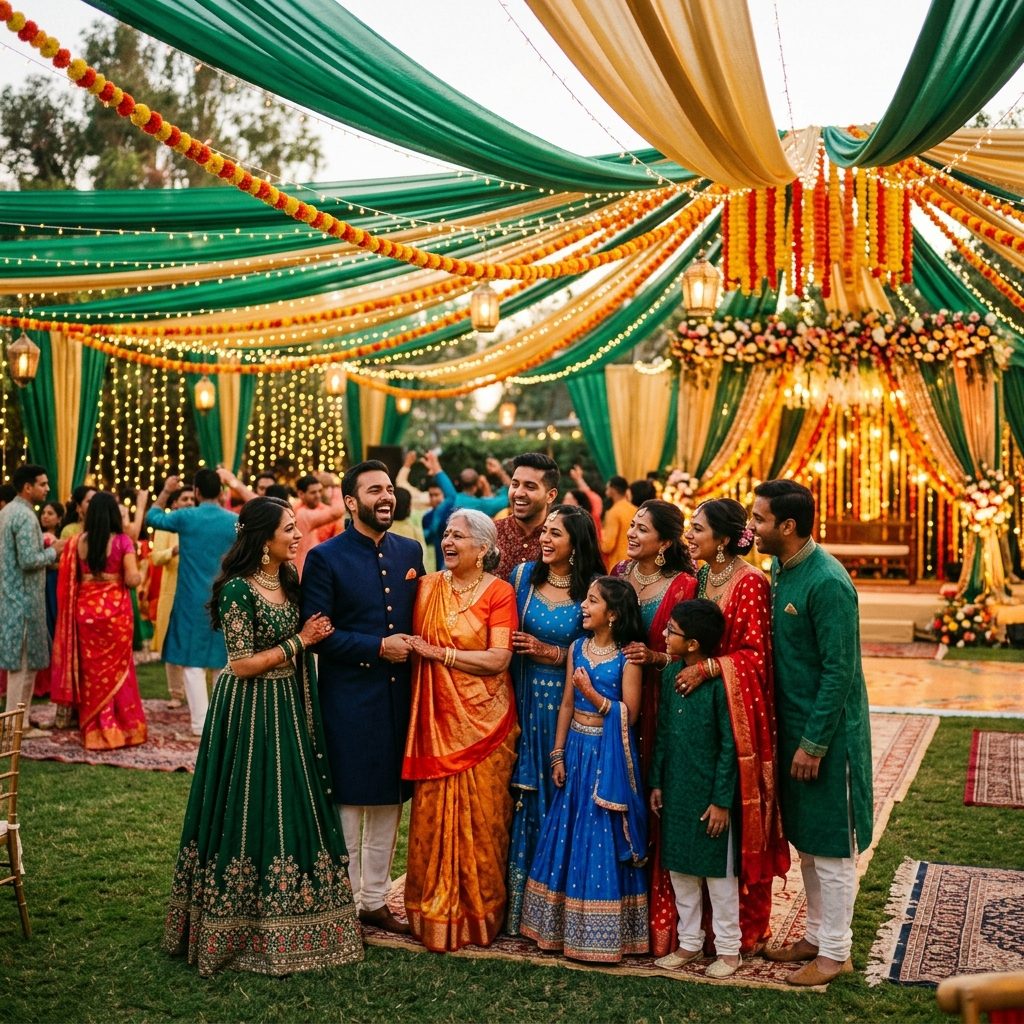
Here is the mistake almost nobody catches until the photos come back: the mehendi looked Instagram-pastel, the sangeet went full Bollywood neon, and the wedding itself was deep maroon and gold. Three events, three completely different weddings. Choosing the right wedding aesthetic isn't about picking the prettiest Pinterest board - it's about picking one visual language and letting it breathe differently across each function. Get that right and even your phone snaps look like a magazine shoot. Get it wrong and your decorator, your invites, and your outfits quietly fight each other for two days.
So what does a "wedding aesthetic" actually mean?
Short answer: it's your colour story, your textures, and your mood - repeated everywhere a guest looks. Not just the stage. The invite that lands in a WhatsApp group, the table runner at the haldi, the font on the welcome board, the entry of the baraat. A real aesthetic is the through-line that makes a Marwari mehendi and a Marwari reception feel like the same wedding wearing two outfits.
The families who nail this usually start with three things: a palette (two anchors plus one accent), a texture (florals, mirror work, raw linen, bandhani), and a mood (regal, breezy, retro, minimal). Write those three down before you book a single vendor. Everything else - flowers, stationery, lighting - just answers to them.
How do I pick a colour palette that doesn't fight my skin tone or the venue?
Blunt verdict: choose the palette for the light, not the screenshot. A dusty rose and sage palette that looked dreamy on your laptop turns muddy and grey under a banquet hall's white tube lights. The same palette glows at a morning haldi in open sun.
So map colour to time of day. Morning and daytime functions - haldi, mehendi, a Bengali gaye holud - love light, warm, high-energy colours: marigold yellow, coral, leaf green, turquoise. Evening events - sangeet, reception, the wedding muhurat itself - carry richer, deeper tones beautifully: wine, emerald, royal blue, classic maroon-and-gold for a North Indian setting, or the unmistakable Kanjeevaram red-and-gold for a South Indian Iyer or Reddy wedding.
A wedding aesthetic isn't the most beautiful thing in the room - it's the one thing every room agrees on.
Do all my functions need to match exactly?
No - and this is the part most families get wrong. They either let every event do its own thing (chaos) or force one identical look onto all of them (boring, and exhausting by day two). The fix is a variations-on-a-theme approach. Keep the anchor colour and the texture constant; change the intensity and the supporting shades per function.
Say your anchor is emerald green with gold and a blush accent. The mehendi leans into blush and soft gold with lots of fresh marigold - light and playful. The sangeet pushes the emerald forward with shimmer and dramatic lighting. The reception goes deepest: emerald, heavy gold, candlelight. Same family of colours, three distinct energies. Your guests feel the continuity without anything looking copy-pasted.
Where this consistency pays off loudest is your stationery. When the same palette and motif run through your save-the-date, your main digital wedding invitation and video invite, and the welcome signage at the venue, the whole celebration reads as one designed event instead of a series of bookings. Pick your invite design early - it often becomes the visual reference everyone else copies.
How do I match the aesthetic to my community and rituals?
Short answer: let the rituals lead, don't fight them. A good aesthetic flatters tradition instead of papering over it. A Tamil Iyer wedding built around the kashi yatra and the oonjal looks most stunning in temple gold, jasmine, and unbleached cotton - a Scandinavian-minimal white palette would feel oddly out of place against the agni and the kolam. A Punjabi wedding with a loud, joyous baraat and choora ceremony can carry hot pink and orange without blinking. A Bengali wedding has its own built-in palette: the red-and-white shankha-pola, the alta, the white-and-red Garad saree. Work with what your customs already hand you.
This is also where headcount quietly shapes design. A 600-guest Marwari wedding needs bolder, larger-scale decor to read across a huge lawn; an intimate 80-person Nair wedding can afford delicate, detailed touches people will actually notice up close. Lock your numbers early - a clear guest list and RSVP flow from a tool like our wedding guest manager tells you whether you're designing for a stadium or a sitting room before you overspend on either.
- Choose two anchor colours plus one accent - more than three and the whole thing turns into a fruit salad.
- Test every palette under the actual venue lighting, at the actual time of day your event runs - daylight and tube lights lie differently.
- Pick one repeating motif (a flower, a mandala, a bandhani print) and stamp it on invites, signage, menus, and return gifts.
- Match colour intensity to the function: light and warm for daytime haldi/mehendi, deep and rich for evening sangeet/reception.
- Decide your invite design before your decor - it's the cheapest place to lock the look, and everything else can follow it.
- Leave one "hero" element undecorated-around - a single mandap, one statement backdrop - so the eye has somewhere to rest.
What's the easiest way to keep the whole thing consistent without losing my mind?
Honestly? Decide the look once, on paper, and make every vendor sign up to it. Build a one-page reference - your three colours, your motif, two or three mood photos - and hand the exact same page to your decorator, your stationery designer, your outfit tailor, and your photographer. When everyone is reading from one sheet, the consistency happens on its own; you stop being the human bridge between five WhatsApp groups.
And don't over-plan the unplannable. The most memorable weddings aren't the ones where every napkin matched - they're the ones with a clear, confident aesthetic and a lot of room for real joy. Some families even meet through compatible profiles on Smart Match and bring two very different family styles to one mandap; even then, one shared palette is what makes both sides feel at home.
Pick your three words - palette, texture, mood - this week, while the excitement is fresh. Nail down your wedding aesthetic early and the rest of the planning stops feeling like a thousand tiny fights and starts feeling like one beautiful idea you're simply building, function by function. Your future self, flipping through those photos, will thank you.