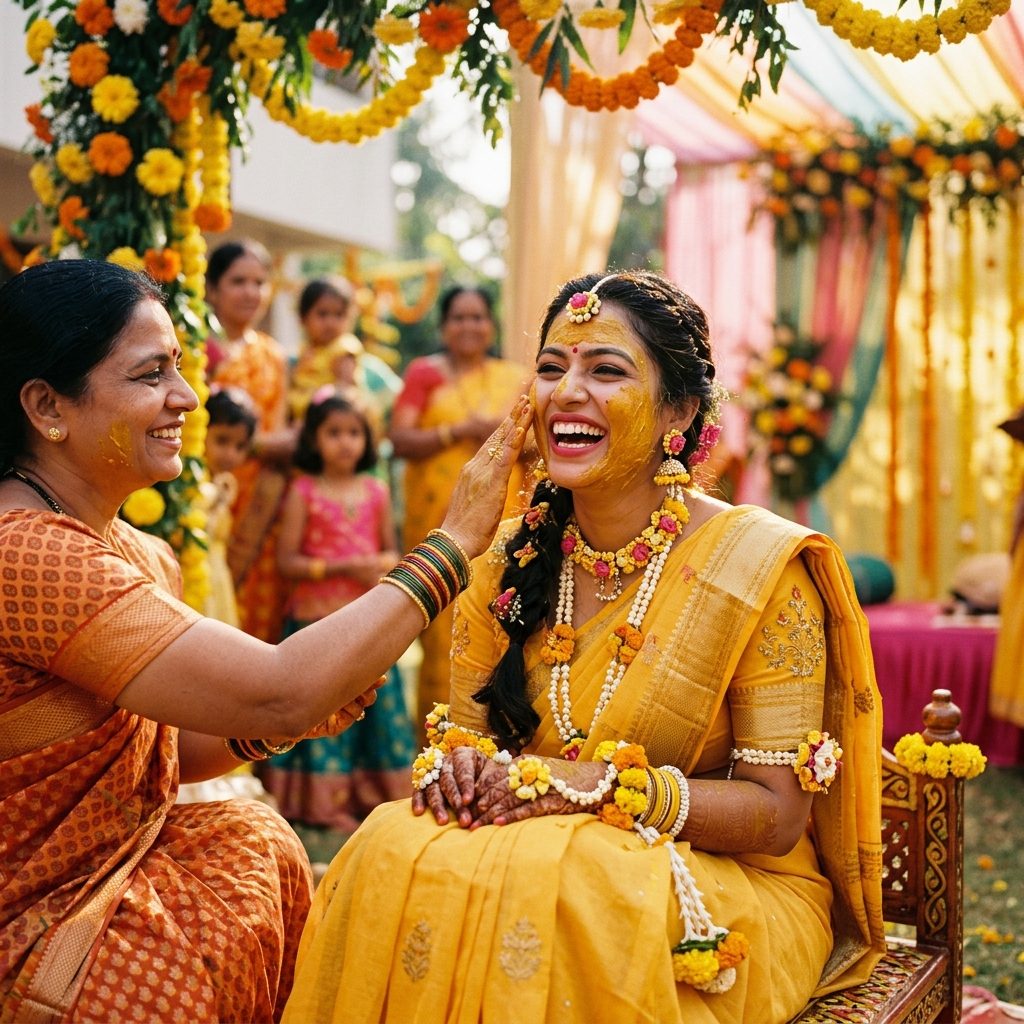
The Haldi ceremony, glowing with the vibrant hue of yellow, is one of the most anticipated pre-wedding rituals in an Indian marriage. While it is often celebrated with high energy, playful smearing of paste, and traditional songs, its roots run deep into ancient Vedic traditions. Known variously as Halad Chadavane in Maharashtra, Gaye Holud in Bengal, and Tel Baan in parts of North India, this ceremony represents far more than just a fun gathering; it is a sacred rite of purification, preparation, and blessing.
The Spiritual Essence and Warding of Evil
Traditionally, turmeric is considered highly auspicious in Hindu rituals. The bright yellow color represents prosperity, fertility, and new beginnings. During the ceremony, a paste of turmeric, sandalwood, oil, and water is applied to the bride and groom. This application serves as a spiritual shield. According to ancient beliefs, the anti-inflammatory and purifying nature of turmeric protects the couple from negative energies or the "nazar" (evil eye) before their big day. It is for this reason that the couple is historically advised not to leave the house after the Haldi ritual until the wedding muhurat.
The Scientific and Cosmetic Benefits of Ubtan
Long before modern skincare clinics existed, Indian ancestors relied on the science of Ayurveda to prepare brides and grooms. The Haldi paste, often enriched with chickpea flour (besan), rose water, and milk, acts as a natural exfoliant. Curcumin, the active ingredient in turmeric, has powerful antiseptic and anti-inflammatory properties. It heals micro-abrasions, fights bacteria, and leaves the skin with a radiant, natural glow. For couples undergoing the physical stress of wedding planning, the gentle massage during Haldi acts as a detoxifying agent, calming the nervous system and preparing the body for the long nuptial ceremonies.
A Celebration of Family and Regional Customs
Beyond the physical and spiritual benefits, Haldi is intensely social. It is a ceremony where formal boundaries dissolve. In Bengali customs, the Gaye Holud involves sending the haldi paste from the groom's house to the bride's house, along with decorated fish and gifts. In Punjabi weddings, the ceremony is accompanied by the singing of traditional folk songs and the tying of Kaliras. It is a moment where aunts, cousins, and friends unite to shower the couple with laughter, love, and playful teasing.
blockquote>The golden hue of Haldi is not merely a dye; it is the color of sunshine, blessing the bride and groom with the warmth of ancestral love and the promise of a bright, healthy life together.Organizing a Seamless Modern Haldi
To make your Haldi ceremony both culturally authentic and comfortable for your guests, keep these practical tips in mind:
- Use Organic Haldi: Opt for organic, skin-safe turmeric or dry root powder to avoid skin allergies or stubborn chemical staining.
- Coordinate the Dress Code: Encourage guests to wear shades of yellow, white, or mustard to create a visually cohesive and energetic atmosphere.
- Set the Timing Right: Ensure the ritual aligns with your auspicious timing. Consulting a priest for the correct Shubh Muhurat ensures the planetary alignments favor the couple's transition.
As you plan these beautiful pre-wedding moments, communicating the details to your loved ones is key. You can easily share the joy and coordinate the schedule for your Haldi, Mehendi, and wedding day using the Shubh Muhrat Invite Studio, which helps you create exquisite, customized digital invitations that reflect your regional traditions. Embracing the deeper meaning behind these rituals makes the journey toward your wedding day truly unforgettable.