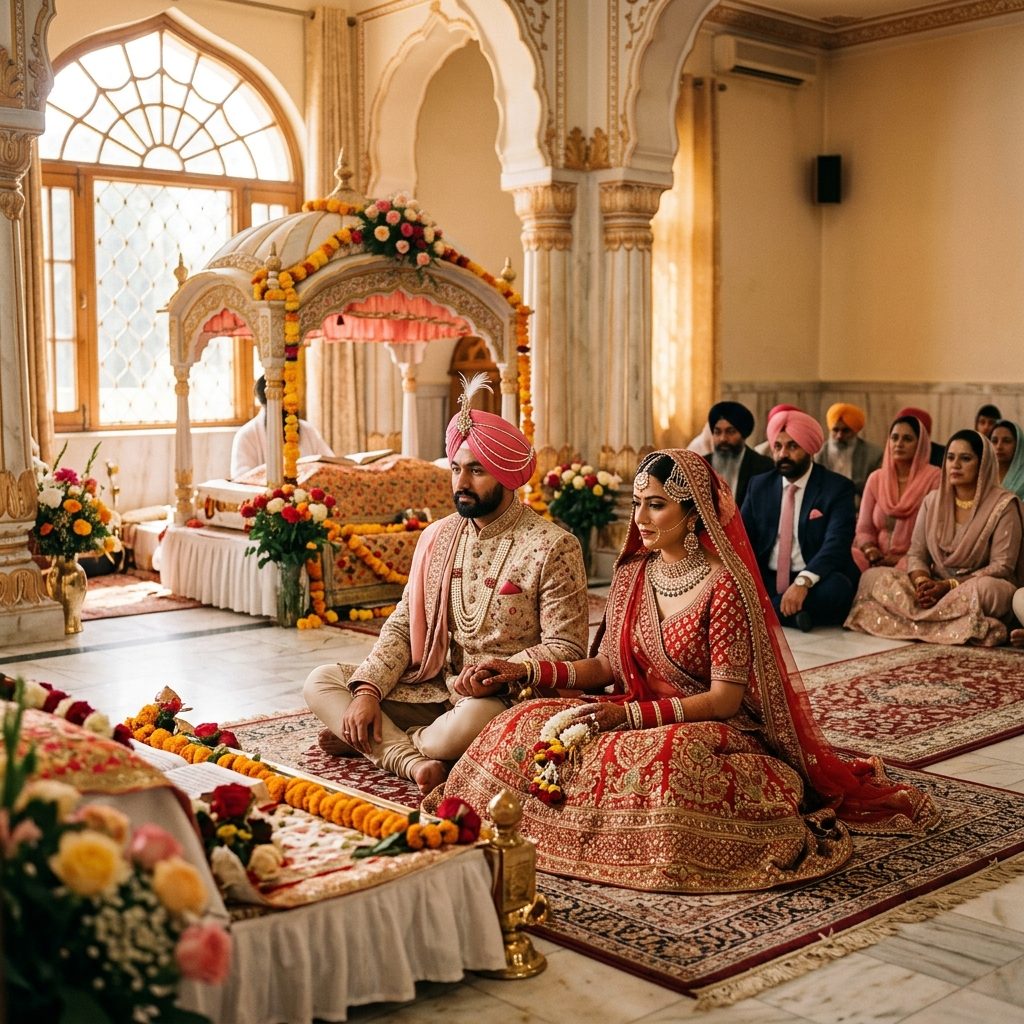
Punjabi weddings are globally renowned for their unmatched energy, warmth, and grand celebrations. However, beyond the high-decibel dhol beats and spectacular dance performances lies a tapestry of deeply rooted Vedic and Sikh traditions. Each ceremony, spanning several days, holds profound cultural significance, designed to transition two individuals and their families into a lifelong union. Understanding the sequence and meaning of these rituals helps families celebrate them with genuine devotion and joy.
The Pre-Wedding Milestones: Roka to Sagaai
The journey begins with the Roka, a simple yet significant ritual that officially announces the union of the couple. During the Roka, the bride’s family visits the groom’s home with sweets, dry fruits, and gifts, securing the alliance. This is often followed by the Chunni Chadana ceremony, where the groom’s mother places a red or pink chunni on the bride’s head, symbolizing her acceptance into the new family. The formal engagement, or Sagaai, involves the exchange of rings and formal gifts, setting the stage for the larger festivities to come.
The Festive Preps: Maiyan, Sangeet, and Jaggo
As the wedding day approaches, the home transforms into a hub of music and laughter. The Maiyan is a traditional cleansing ceremony where turmeric paste is applied to the bride and groom at their respective homes. A colorful rangoli is drawn, and maternal uncles present the traditional wedding bangles. The night before the wedding belongs to the Jaggo and Sangeet. Jaggo, which translates to "wake up," involves female relatives carrying a decorated copper pot with lit clay lamps on their heads, dancing through the neighborhood to invite everyone to the festivities.
The four Lavan, or sacred circumambulations during the Anand Karaj, represent the four stages of spiritual and emotional growth in a marriage, guiding the couple toward a unified soul.
The Sacred Union and Grand Finale
The wedding day itself features the core spiritual ceremonies. For Sikh couples, this is the Anand Karaj, performed at the Gurdwara in the presence of the Guru Granth Sahib. For Hindu Punjabi couples, the Vedic Phere take place around the sacred fire. This is followed by the emotional Doli, marking the bride’s departure from her parental home. The celebration culminates in the grand Reception, a formal party where the newlyweds are introduced to the wider social circle amidst grand dining and dancing.
Planning a multi-day Punjabi wedding requires meticulous organization, especially when coordinating travel and attendance for hundreds of relatives across different venues. To ensure you do not miss a single loved one in the chaos, simplify your planning with the Shubh Muhrat Guest Manager to track RSVPs, dietary preferences, and accommodation details effortlessly.
- Roka & Chunni: The initial commitment and formal acceptance.
- Maiyan & Jaggo: Purifying rituals and neighborhood musical processions.
- Anand Karaj / Phere: The sacred vows and spiritual union.
- Doli & Reception: The emotional farewell and the grand celebration.