
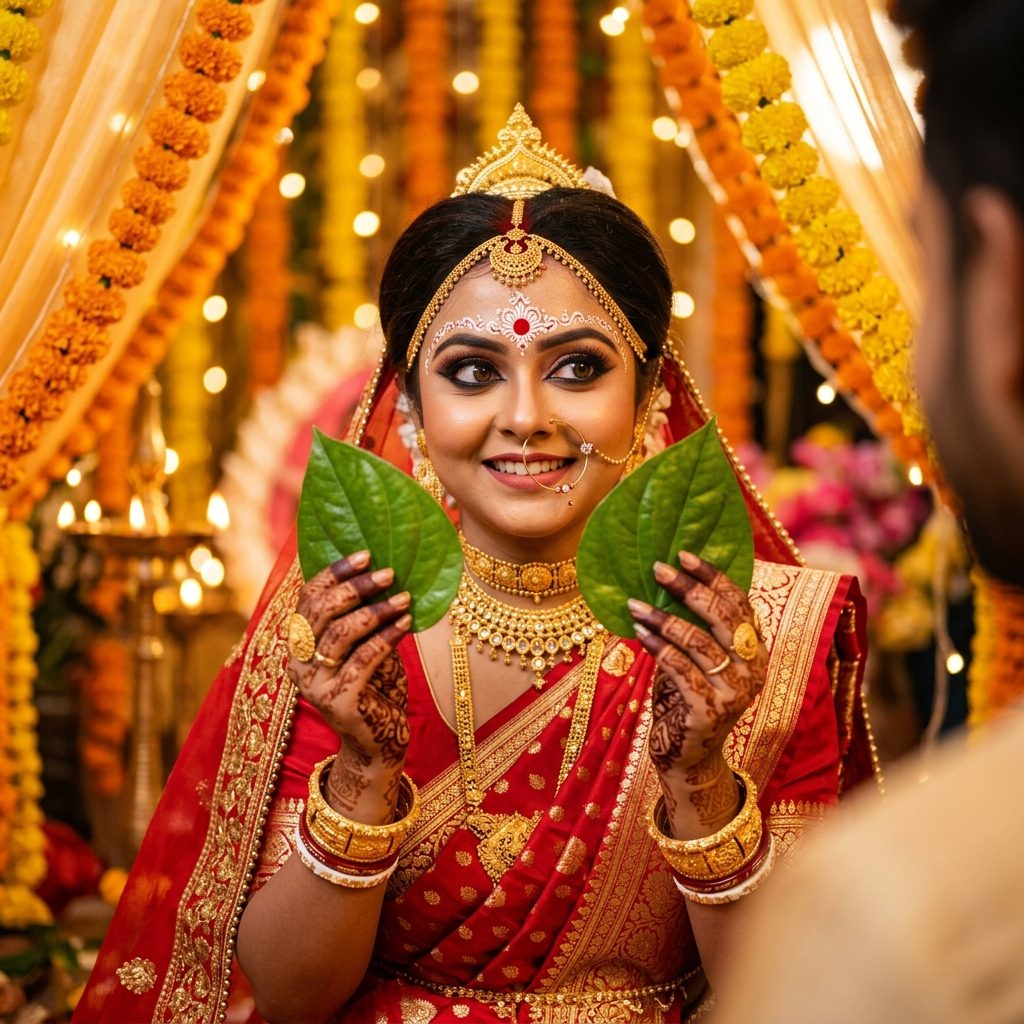
A Bengali wedding, or 'Biye', is a sensory tapestry of sounds, colors, and deep-rooted rituals. From the piercing sound of the conch shell to the rhythmic ululation by the women of the household, every element serves a precise spiritual and social purpose. Beyond the grandeur and the feasting lies a series of beautiful, symbolic steps designed to transition two individuals into a shared destiny.
The Sacred Prelude: Aiburo Bhaat and Dodhi Mongol
The wedding festivities begin long before the main ceremony. The Aiburo Bhaat is the traditional feast where the bride and groom, in their respective homes, enjoy their last meal as single individuals. Prepared with love by close relatives, this meal includes a grand spread of traditional Bengali delicacies, symbolizing the community's support. On the wedding morning, the Dodhi Mongol ritual takes place, where the couple is fed a mixture of curd, flattened rice, and sweets at dawn, providing them sustenance for the day-long fast.
The Moment of Union: Saat Paak and Shubho Drishti
Perhaps the most iconic moment of a Bengali wedding is the Saat Paak. The bride, sitting on a low wooden stool called a 'Piri', is carried by her brothers and male relatives around the groom seven times. During this circumambulation, the bride hides her face behind two betel leaves. This leads directly to the Shubho Drishti, the sacred first glance, where the bride removes the leaves to look directly into the groom's eyes. This moment signifies the formal acceptance of each other.
The Fire Witness: Saptapadi and Kusumo Dige
Following the Sampradan, where the bride's father formally hands her hand to the groom, the couple takes seven steps together around the holy fire. In Bengali tradition, this is accompanied by Kusumo Dige, where the bride's brother pours puffed rice into her hands, which she, guided by the groom standing behind her, offers to the sacrificial fire. This represents the family's joint wishes for the couple's material and spiritual prosperity.
The exchange of garlands during Mala Badal, immediately following Shubho Drishti, represents the formal union of two souls, bridging their past lives into a shared future under the blessings of their elders.
Symbols of Eternal Commitment
Bengali weddings are rich with unique symbols that carry profound meanings for the bride's new phase of life:
- Shakha and Pola: The red coral and white conch shell bangles worn by the bride, symbolizing health, prosperity, and her married status.
- Topor and Mukut: The elegant white headgear made of sholapith worn by the groom and the bride to signify their status as royalty on their special day.
- Sindoor Daan: The final ritual where the groom applies vermilion in the parting of the bride's hair, sealing their holy matrimony.
Understanding the depth of these rituals helps modern couples appreciate the legacy they carry forward. As you plan your own traditional wedding, starting with the right steps is essential. Before the rituals begin, presenting your background elegantly is key. You can create a beautifully formatted marriage profile using the Shubh Muhrat Biodata Maker to honor your family's heritage and find your perfect match.